MEET THE TEAM!
Professor Richard Fullagar
Professor Richard Fullagar
Professor Richard Fullagar
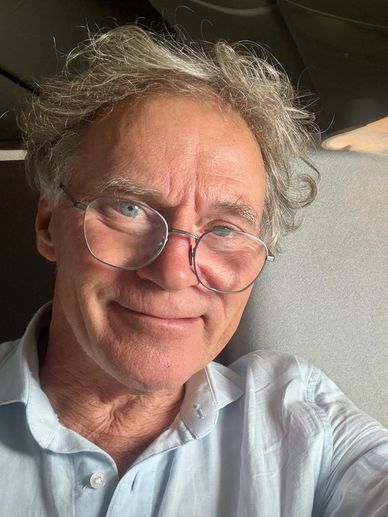
Professor Richard Fullagar is an Australian archaeologist who has published widely on the function of stone tools from key sites spanning early modern human dispersals in eastern Asia, Australia, Pacific and the Americas. He is a world leader in the study of usewear and residue traces.
Dr Ebbe Hayes
Professor Richard Fullagar
Professor Richard Fullagar
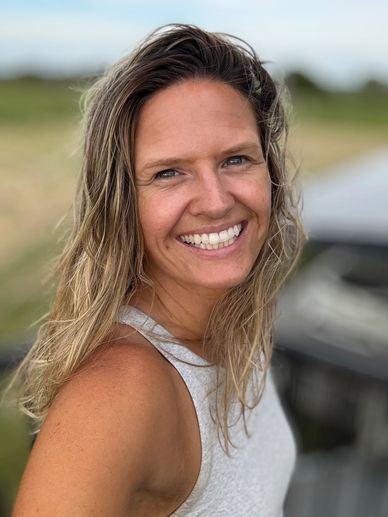
Dr Elspeth (Ebbe) Hayes is an Australian archaeologist with a strong interest in material culture, Indigenous technologies, and the interpretation of past tool use within different cultural landscapes. She studies usewear and residue traces on Aboriginal stone and wooden artefacts.
Dr Colin Pardoe
Professor Richard Fullagar
Dr Colin Pardoe
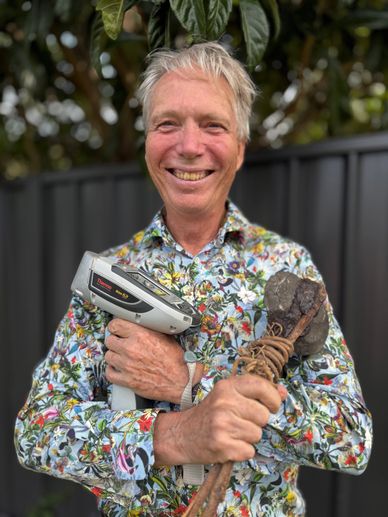
Dr Colin Pardoe is an Australian archaeologist working in the fields of bioanthropology and bioarchaeology. He has worked with many Aboriginal communities across Australia and is a world leader in the study of Aboriginal Australian skeletal remains.

Dr Elspeth Hayes, Director
Ph: +61 428 066 058
Dr Elspeth “Ebbe” Hayes completed her PhD at the University of Wollongong, Australia, in 2015. Her PhD research focused on the function of Aboriginal grinding tools through a detailed functional analysis of the usewear and residue traces on tools from key archaeological sites in Australia (Madjedbebe and Lake Mungo). During her PhD, Ebbe visited Lakehead University in Canada to study chemical methods of residue analysis, including the newest applications of spectroscopy, gas-chromatography mass spectrometry (GC-MS), biochemical staining and others. As part of a European internship program, Ebbe also received a travel scholarship to visit and work in the TraceoLab at the University of Liège in Belgium. The TraceoLab is known globally as one of the largest research centres for functional studies, housing 11 optical light microscopes, a scanning electron microscope and over 3000 experimental tools.
Following the completion of her PhD, Ebbe worked as a Research Fellow in the Centre for Archaeological Science at the University of Wollongong where she was involved in several collaborative projects to study tool function at early human sites in eastern Asia and Australia, including Denisova Cave (Siberia), Liang Bua (Indonesia) and Madjedbebe (northern Australia). Ebbe has also worked as a post-doctoral researcher at the University of Liège in Belgium, where she investigated the evolution of stone tool hafting in the Palaeolithic through residue analysis using the scanning electron microscope as part of the EVO-HAFT Project.
Ebbe is currently an Honorary Fellow at the University of Wollongong and an Associate Member of The Australian Association of Consulting Archaeologists Inc. (AACAI).
Qualifications
Doctor of Philosophy (with commendation) 2015
Centre for Archaeological Science, School of Earth and Environmental Science,
Faculty of Science, Medicine and Health, University of Wollongong
Bachelor of Science (Hons 1) (Geoscience) 2010
School of Earth and Environmental Science, Faculty of Science, Medicine and Health
University of Wollongong
Publications
2025.
Hayes, E.H., Bordes, L., Fullagar, R., Spry, C., Mullins, B., Jones, R., Wandin, A., Kerr, A.D., Lasky-Davison, Z., Morrison, W. and Modra, L., 2025. Traditional cultural knowledge and functional analysis of a non-returning wangim (boomerang) from Wurundjeri Woi-wurrung Country, southeastern Australia. Australian Archaeology, 91(3), pp.280-298.
Fariña, R.A., Hayes, E.H., Lemoine, L.A., Fullagar, R., Tambusso, P.S. and Varela, L., 2025. An indentation in a 33,000-year-old right calcaneus of the ground sloth Lestodon (Xenarthra, Folivora) from Uruguay and its possible human agency: RA Fariña et al. Swiss Journal of Palaeontology, 144(1), p.31.
Spry, C., Freedman, D.L., Hayes, E.H., Hitchcock, G., Morrison, W., Mullins, B., Jones, R., Wandin, A., Fullagar, R., Kurpiel, R. and Jankowski, N., 2025. New braided knowledge understandings of an Aboriginal earth ring and biik wurrdha (Jacksons Creek, Sunbury) on Wurundjeri Woi-wurrung Country, southeastern Australia. Australian Archaeology, pp.1-24.
2024.
Hayes, E.H., 2024. Twelve thousand years of ritual practice. Nature Human Behaviour 8(8), pp.1444-1445.
McNiven, I.J., Ash, J., Mialanes, J., McDowell, M.C., Stevenson, J., Tener, S., Fullagar, R., Hayes, E.H., Field, J.H., Crouch, J. and Gunn, R., 2024. Garden Range 2: Taungurung rock art rockshelter site reveals 11,000 years of Aboriginal occupation of the Strathbogie Ranges, Central Victoria. Australian Archaeology, pp.1-30.
2023.
Spry, C., Hayes, E., Gunn, R., Fullagar, R., Evans, A., Morrison, W., Chamberlain, M. and Langowski, N., 2022. Twentieth century rock engravings at Darebin Creek, inner-city Melbourne (Wurundjeri Woiwurrung Country), southeastern Australia.
Hayes, E.H., Fullagar, R., Field, J.H., Coster, A.C., Matheson, C., Nango, M., Djandjomerr, D., Marwick, B., Wallis, L.A., Smith, M.A. and Clarkson, C., 2022. 65,000-years of continuous grinding stone use at Madjedbebe, Northern Australia. Scientific Reports, 12(1): 1-17.
2021.
Hayes, E.H., Fullagar, R., Kamminga, J., Prinsloo, L.C., Bordes, L., Sutikna, T., Tocheri, M.W., Saptomo, E.W. and Roberts, R.G., 2021. Use-polished stone flakes from Liang Bua, Indonesia: Implications for plant processing and fibrecraft in the Late Pleistocene. Journal of Archaeological Science: Reports, 40, p.103199.
Fullagar, R., Hayes, E.H., Chen, X., Ma, X., Liu, L. A functional study of denticulate sickles and knives, ground stone tools from the early Neolithic Peiligang culture, China (2021) Archaeological Research in Asia 26(2021): 100265.
Hayes, E.H., Field, J.H., Coster, A.C.F., Fullagar, R., Matheson, C., Florin, S.A., Nango, M., Djandjomerr, D., Marwick, B., Wallis, L.A., Smith, M.A. (2021) Holocene grinding stones at Madjedbebe reveal the processing of starchy plant taxa and animal tissue. Journal of Archaeological Science: Reports 35(2021): 102754.
2020.
Hayes, E.H., C. Spry, R. Fullagar, P. Schell, M. Goulding (2020) Tool-use experiments to determine the function of an incised ground stone artefact with potential symbolic significance. Journal of Lithic Studies 7(3): 1–17.
Bordes, L., Hayes, E.H., Fullagar, R. and Deméré, T., (2020) Raman and optical microscopy of bone micro-residues on cobbles from the Cerutti mastodon site. Journal of Archaeological Science: Reports 34(2020): 102656.
Field, J.H., Summerhayes, G.R., Luu, S., Coster, A.C.F., Ford, A., Mandui, H., Fullagar, R., Hayes, E.H., Leavesley, M., Lovave, M., Kealhofer, L. (2020) Functional studies of flaked and ground stone artefacts reveal starchy tree nut and root exploitation in mid-Holocene highland New Guinea. The Holocene 30(9): 1360–1374.
Spry, C., Hayes, E.H., Allen, K., Long, A., Paton, L., Hua, Q., Armstrong, B.J., Fullagar, R., Webb, J., Penzo-Kajewski, P., Bordes, L. (2020). Wala-gaay Guwingal: A twentieth century Aboriginal culturally modified tree with an embedded stone tool. Australian Archaeology 86(1): 3–20.
Shaw, B., Field, J.H., Summerhayes, G.R., Coxe, S., Coster, A.C., Ford, A., Haro, J., Arifeae, H., Hull, E., Jacobsen, G., Fullagar, R., Hayes, E.H. (2020) Emergence of a Neolithic in highland New Guinea by 5000 to 4000 years ago. Science Advances 6(13): 4573–4583.
Hayes, E.H., R. Fullagar, B. Marwick (2020) Australian usewear/residue studies, artefact design and multi-purpose tools. In: Gibaja, J., I. Clemente, N. Mazzucco and J. Marreiros. Hunter-Gatherers tool kit: a functional perspective. pp. 260–289. Cambridge: Cambridge Scholars.
Spry, C., Armstrong, B.J., Hayes, E.H., Webb, J.A., Allen, K., Paton, L., Hua, Q., Fullagar, R. (2020) How a stone wedged in a gum tree shows the resilience of Aboriginal culture in Australia. The Conversation (Published online 20/06/2020).
Rots, V., Hayes, E.H., Akerman, K., Green, P., Clarkson, C., Lepers, C., Bordes, L., McAdams, C., Foley, E., Fullagar, R. (2020) Hafted Tool-use Experiments with Australian Aboriginal Plant Adhesives: Triodia Spinifex, Xanthorrhoea Grass Tree and Lechenaultia divaricata Mindrie. EXARC Journal, 1.
2019.
Hayes, E.H. and V. Rots (2019) Documenting scarce and fragmented residues on stone tools: an experimental approach using optical microscopy and SEM-EDS. Journal of Archaeological and Anthropological Science 11(7): 3065–3099.
Hayes, E.H., D. Cnuts, V. Rots (2019) Integrating SEM-EDS in a sequential residue analysis protocol: benefits and challenges. Journal of Archaeological Science: Reports 23: 116–126.
Spry, C., Hayes, E.H., Fullagar, R., Schell, P., Goulding, M. (2019) An unusual, incised ground stone artefact from southwestern Victoria, Australia: its function and potential symbolic significance. Australian Archaeology 85(1): 95–101.
Pardoe, C., Fullagar, R., Hayes, E.H. (2019) Quandong stones: A specialised Australian nut-cracking tool. PLoS ONE 14(10): e0222680.
Luong, S., Tocheri, M.W., Hayes, E.H., Sutikna, T., Fullagar, R., Saptomo, E.W. and Roberts, R.G. (2019). Combined organic biomarker and use-wear analyses of stone artefacts from Liang Bua, Flores, Indonesia. Scientific Reports 9(1): 1–17.
2018.
Hayes, E.H., R., Fullagar, K. Mulvaney, K. Connell (2018) Food or fibercraft? Grinding stones and Triodia grass (spinifex). Quaternary International 468: 271–283.
Hayes, E.H., Fullagar, R., Pardoe, C. (2018) Sandstone grinding/pounding tools: Use-trace reference libraries and Australian archaeological applications. Journal of Archaeological Science: Reports 20: 97–114.
Bordes, L., Fullagar, R. Prinsloo, L., Hayes, E.H., Kozlikin, M.B., Shunkov, M.V., Derevianko, A.P., Roberts, R.G. (2018) Corrigendum to “Raman spectroscopy of lipid micro-residues on Middle Palaeolithic stone tools from Denisova Cave, Siberia” [J. Archaeol. Sci. 95 July 2018 52–63]. Journal of Archaeological Science 100: 201.
Bordes, L., Fullagar, R., Prinsloo, L.C., Hayes, E.H., Kozlikin, M., Shunkov, M., Derevianko, A., Roberts, R.G. (2018) Raman spectroscopy of lipid micro-residues on Middle Palaeolithic stone tools from Denisova Cave, Siberia. Journal of Archaeological Science 95: 52–63.
2017.
Hayes, E.H., Cnuts, D., Lepers, C., Rots, V. (2017) Learning from blind tests: determining the function of experimental grinding stones through use-wear and residue analysis. Journal of Archaeological Science Reports 11: 245–260.
Hayes, E.H., Fullagar, R., Spry, C., Schell, P., Goulding, M. (2017) An unusual ground stone artefact from Bannockburn, near Geelong in southwestern Victoria. In C. Spry, E. Foley, D. Frankel, S. Lawrence, I. Berelov and S. Canning (eds), Excavations, Surveys and Heritage Management in Victoria (Volume 6), p. 91. Melbourne: La Trobe University.
Marwick, B., Hayes, E.H., Clarkson, C., Fullagar, R. (2017) Movement of lithics by trampling: an experiment in Madjedbebe sediments. Journal of Archaeological Science 79: 73–85.
Rots, V., Hayes, E.H., Cnuts, D., Lepers, C., Fullagar, R. (2017) Correction: Making Sense of Residues on Flaked Stone Artefacts: Learning from Blind Tests. PloS ONE 12(5): p.e0178311.
Luong, S., Hayes, E.H., Flannery, E., Sutikna, T., Tocheri, M.W., Wahyu, E., Jatmiko, Roberts, R.G. (2017) Development and application of a comprehensive analytical workflow for the quantification of non-volatile low molecular weight lipids on archaeological stone tools. Analytical Methods 9: 4349–4362.
Clarkson, C., Jacobs, Z., Marwick, B., Fullagar, R., Wallis, L., Smith, M., Roberts, R.G., Arnold, L., Hayes, E.H., Lowe, K., Carah, X., Florin, A., McNeil, J., Huntley, J., Brand, H., Fairbairn, A., Connell, K., Norman, K., Shulmeister, J., Pardoe, C. (2017) Human occupation of northern Australia by 65,000 years ago. Nature 547: 306–310.
Bordes, L., Prinsloo, L.C., Fullagar,, R., Sutikna, T., Hayes, E.H., Jatmiko, Wahyu Saptomo, E., Tocheri, M.W., Roberts, R.G. (2017) Viability of Raman microscopy to identify micro-residues related to tool-use and modern contaminants on prehistoric stone artefacts. Journal of Raman Spectroscopy 48: 1212–1221.
Fullagar, R., Stephenson, B., Hayes, E.H. (2017) Grinding grounds: function and distribution of grinding stones from an open site in the Pilbara, Western Australia. Quaternary International 427: 175–183.
2016.
Rots, V., Hayes, E.H., Cnuts, D., Lepers, C., Fullagar, R. (2016) Making sense of residues on flaked stone artefacts: learning from blind tests. Plos ONE 11(3): p.e0150437.
2015.
Fullagar, R., Hayes, E.H., Stephenson, B., Field, J., Matheson, C., Stern, N., Fitzsimmons, K. (2015a) Evidence for Pleistocene seed grinding at Lake Mungo, south-eastern Australia. Archaeology in Oceania 50: 3–19.
Fullagar, R., Hayes, E.H., Stephenson, B., Field, J., Matheson, C., Stern, N., Fitzsimmons, K. (2015b) The scale of seed grinding at Lake Mungo. Archaeology in Oceania 50: 177–179.
Smith, M., Hayes, E.H., Stephenson, B. (2015) Mapping a millstone: the dynamics of use-wear and residues on a Central Australian seed-grinding implement. Australian Archaeology: 80: 70–79.
Clarkson, C., Smith, M., Marwick, B., Fullagar, R., Wallis, L., Faulkner, P., Manne, T., Hayes, E.H., Roberts, R.G., Jacobs, Z., Carah, X., Lowe, K.M., Matthews, J., Florin, A. (2015) The archaeology, chronology and stratigraphy of Madjedbebe (Malakunanja II): A site in northern Australia with early occupation. Journal of Human Evolution 83: 46–64.
2014.
Hayes, E.H., Fullagar, R., Clarkson, C., O’Connor, S. (2014) Usewear on the platform: ‘use-flakes’ and ‘retouch-flakes’ from northern Australia and Timor. In S. Nunziante Cesaro and C. Lemori (eds), An Integration of Use-Wear and Residue Analysis for the Identification of the Function of Archaeological Stone Tools: Proceedings of the International Workshop Rome, March 5th–7th, 2012, pp.77–90. British Archaeological Reports: 2649. Oxford: Archaeopress.
2013.
Jacobs, Z., Hayes, E.H., Roberts, R.G., Galbraith, R.F., Henshilwood, C.F. (2013) An improved OSL chronology for the Still Bay layers at Blombos Cave, South Africa: further tests of single-grain dating procedures and a re-evaluation of the timing of the Still Bay industry across southern Africa. Journal of Archaeological Science 40(1): 579–594.
Theses
Hayes, E.H. (2015). What was ground? A functional analysis of grinding stones from Madjedbebe and Lake Mungo, Australia. PhD thesis, University of Wollongong, New South Wales, Australia.
Hayes, E.H. (2010) Extending the chronology for Blombos Cave, South Africa: Further evidence for the origins of modern human behaviour. Honours thesis, University of Wollongong, New South Wales, Australia.
Professor Richard Fullagar, Vice President
E. richard.fullagar@coreartefactresearch.com.au
Ph. +61 402 544 810
Dr Richard Fullagar is an Australian archaeologist who has published widely on the function of stone tools from key sites spanning early modern human dispersals in eastern Asia, Australia, Pacific and the Americas. His first job was with the Victoria Archaeological Survey (1978–1982). He is currently an Adjunct Professor involved with Australian Research Council (ARC) projects led by researchers at University of Western Australia (Desert to the Sea: Managing Rock Art, Country and Culture), Flinders University (Rockshelters and Rock Art in the River Murray Gorge) and La Trobe University (Lake Mungo). He is currently writing (in collaboration with Colin Pardoe and Elspeth Hayes) a comprehensive book on Australian Aboriginal ground stone tools.
Richard has been awarded 13 ARC grants including fellowships at the Australian Museum and University of Sydney. He has worked on archaeological sites in Australia, Papua New Guinea and Southeast and Eastern Asia. His main interests are how stone tools were used and the history of human dispersal, behavior and subsistence. He has supervised many Honours and PhD students and postdocs in Australia and other countries. Richard has undertaken research and consulting jobs in all Australian states and was a founding Director (with Michael Slack) of Scarp Archaeology, a company that developed research collaborations with several institutions; and completed large projects in the Pilbara WA (e.g., with Rio Tinto Iron Ore and BHP Billiton Iron Ore) and the Hunter Valley NSW (e.g., with Transgrid and Rio Tinto Coal Australia).
Richard helped establish and was the foundation President of AWRANA (Association of Wear and Residue Analysts). He also helped establish and manage ARCAS (Australasian Research Cluster for Archaeological Science). He has regularly presented papers at national and international conferences and been a visiting scholar/invited keynote at several universities, including Liège (Belgium), Leiden (Netherlands), Stanford (USA), Xiamen (China), Tokyo (Japan).
Awards
Laila Haglund Prize 2009 for outstanding contribution to consulting (best conference paper).
Life membership 2017 “…in recognition of your role as a long-standing member and the generous amount of time spent in various roles in service to our association, as well as your innovation and careful work in the field of consulting archaeology.” (Australian Association of Consulting Archaeologists Inc.)
Inaugural Bruce Veitch Award for Excellence in Indigenous Engagement 2007 for “…an archaeological or cultural heritage project, which has produced a significant outcome for Indigenous interests.” The citation included: “Richard Fullagar has a long and distinguished career in archaeology spanning the last 30 years which has been centred on working in collaboration with Aboriginal communities. He has always practiced archaeology with a sense of moral and ethical obligation to the people he has worked with and has actively sought to engage with traditional owners on all the projects he has been involved in. His commitment has always been long-term and often has involved significant outcomes for individuals, communities, and for the ethical standing of archaeology in this country. (Australian Archaeological Association):
Qualifications
PhD (1986) Archaeology, La Trobe University, Melbourne.
MA (1982) Prehistory, La Trobe University, First Class Honours.
BA (1977) Economics and Ancient Greek, University of Melbourne.
Publications
Richard has authored more than 250 papers since 1978, including 180 refereed academic publications, 70 externally refereed popular science articles for Nature Australia, and several pieces for The Conversation.
Citations: 11038
h-index: 51
i10-index: 139
See Google Scholar for details.